
Unleashing the Mystique of Assateague Wild Horses: A Glimpse into their Fascinating World
The Assateague Wild Horses are a unique and iconic species that roam the shores of Assateague Island, located off the coast of Maryland and Virginia in the
The Assateague Wild Horses are a unique and iconic species that roam the shores of Assateague Island, located off the coast of Maryland and Virginia in the United States. These horses have captured the hearts and imaginations of locals and visitors alike, with their untamed beauty and mysterious presence. The horses are an integral part of the Assateague Island ecosystem, playing a crucial role in maintaining the delicate balance of the island’s flora and fauna.
Key Takeaways
- Assateague Wild Horses are a unique and iconic species found on the barrier island of Assateague.
- The horses are believed to have originated from domesticated horses that were brought to the island by early settlers.
- The horses have adapted to their environment by developing unique characteristics such as their small size and ability to drink saltwater.
- The horses live in a harsh and dynamic environment that includes salt marshes, sand dunes, and beaches.
- The horses live in social groups led by a dominant mare and exhibit interesting behaviors such as swimming and rolling in the sand.
The History and Origin of the Assateague Wild Horses
The origin of the Assateague Wild Horses is shrouded in mystery and speculation. There are several theories on how these horses arrived on the island. One theory suggests that they are descendants of domesticated horses that were brought to the island by early settlers in the 17th century. Another theory proposes that they are descendants of Spanish horses that survived a shipwreck off the coast of Assateague Island in the 16th century.
Regardless of their origin, the horses have become an integral part of the local community’s history and culture. They have been a source of inspiration for artists, writers, and photographers, who have captured their beauty in various forms of art. The horses have also become a symbol of resilience and freedom, embodying the spirit of Assateague Island.
The Unique Characteristics of the Assateague Wild Horses
The Assateague Wild Horses possess several unique physical characteristics that distinguish them from domestic horses. They are typically smaller in size, standing at around 13 to 15 hands high. They have sturdy bodies with strong legs and hooves, which enable them to navigate the sandy terrain of the island.
In terms of behavior, the Assateague Wild Horses exhibit distinct traits that set them apart from their domestic counterparts. They are known for their intelligence, adaptability, and strong sense of self-preservation. These horses have learned to survive in a harsh and unpredictable environment, relying on their instincts and natural instincts to find food, water, and shelter.
The Habitat and Environment of the Assateague Wild Horses
| Category | Metric |
|---|---|
| Location | Assateague Island, Virginia and Maryland |
| Climate | Humid subtropical climate with hot summers and mild winters |
| Vegetation | Marsh grasses, beach grasses, bayberry, poison ivy, and pine trees |
| Water sources | Atlantic Ocean, bays, and freshwater ponds |
| Population | Approximately 300 wild horses |
| Behavior | Horses graze on vegetation, drink from water sources, and seek shelter from harsh weather conditions |
| Conservation status | Considered a “threatened” species due to habitat loss and human interference |
Assateague Island is a unique ecosystem that consists of sandy beaches, salt marshes, and maritime forests. The island is home to a diverse range of plant and animal species, many of which are adapted to the harsh coastal environment. The horses have adapted to this environment by developing certain physical and behavioral traits that enable them to thrive.
The horses have evolved to withstand the harsh weather conditions on the island, including strong winds, salt spray, and extreme temperatures. They have developed a thick double coat that helps insulate them during the cold winter months. Their hooves are also adapted to the sandy terrain, allowing them to traverse the soft sand with ease.
The Social Structure and Behavior of the Assateague Wild Horses
The Assateague Wild Horses live in small family groups known as bands. Each band is led by a dominant stallion, who is responsible for protecting the group and ensuring their survival. The stallion will defend his band from rival stallions and other threats, using displays of aggression and vocalizations to establish his dominance.
Within each band, there is a hierarchy that determines the social order. The dominant mare is usually the mother of the other members of the band, including her offspring and any other mares that may have joined the group. The subordinate members of the band will follow the lead of the dominant mare and stallion, forming a cohesive unit that works together for the benefit of the group.
The Diet and Feeding Habits of the Assateague Wild Horses
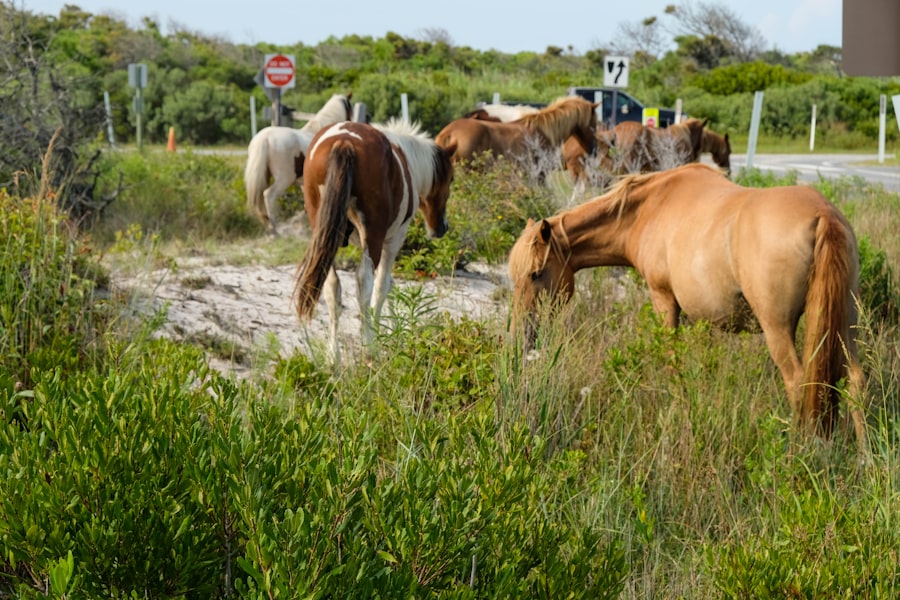
The Assateague Wild Horses are herbivores, primarily feeding on grasses, sedges, and other vegetation found on the island. They have adapted to the limited food resources on the island by developing a specialized digestive system that allows them to extract nutrients from coarse and fibrous plant material.
Water is also a crucial resource for the horses, especially during the hot summer months. They obtain water from various sources on the island, including freshwater ponds, marshes, and rainwater collected in natural depressions. The horses have also been observed drinking saltwater from the ocean, although this is not their preferred source of hydration.
The Reproduction and Life Cycle of the Assateague Wild Horses
The Assateague Wild Horses have a unique reproductive cycle that is closely tied to the seasons. Mating season typically occurs in the spring, when the weather is warmer and food resources are more abundant. During this time, the dominant stallion will mate with multiple mares in his band, ensuring the survival of his genetic lineage.
Foaling season usually takes place in the late spring or early summer, with most births occurring between April and June. The mares will give birth to a single foal, which will stay with its mother for several months before becoming independent. The survival rate of foals is relatively high, with most of them reaching adulthood and joining their own bands.
The Role of Assateague Wild Horses in the Ecosystem
The Assateague Wild Horses play a crucial role in maintaining the biodiversity of Assateague Island. They act as grazers, consuming vegetation and preventing certain plant species from becoming dominant. By doing so, they create a more diverse and balanced ecosystem that supports a wide range of other wildlife species.
The horses also contribute to soil fertility through their droppings, which contain nutrients that enrich the soil and promote plant growth. Their hooves help aerate the soil, allowing water and nutrients to penetrate deeper into the ground. In this way, they play a vital role in the overall health and productivity of the island’s ecosystem.
The Challenges and Conservation Efforts for the Assateague Wild Horses
The Assateague Wild Horses face several challenges to their survival, including habitat loss, disease, and human interference. Development along the coast has resulted in the loss of natural habitat for the horses, forcing them to compete for limited resources. Disease outbreaks, such as the recent outbreak of swamp cancer, have also had a devastating impact on the population.
To protect and manage the herd, various conservation efforts have been implemented. These include regular monitoring of the horses’ health and population size, as well as the implementation of vaccination programs to prevent disease outbreaks. Efforts are also being made to educate the public about responsible tourism and the importance of preserving the horses’ natural habitat.
The Experiences and Opportunities for Visitors to Observe the Assateague Wild Horses
Visitors to Assateague Island have the unique opportunity to observe the Assateague Wild Horses in their natural habitat. There are several ways to view the horses, including guided tours, hiking trails, and kayak excursions. It is important for visitors to follow guidelines and regulations when interacting with the horses, such as maintaining a safe distance and not feeding or touching them.
Responsible tourism is crucial for the well-being of the horses and their continued survival. By respecting their natural behavior and habitat, visitors can help ensure that future generations will be able to experience the beauty and wonder of these magnificent creatures.
The Assateague Wild Horses are not only a symbol of beauty and freedom but also an integral part of the Assateague Island ecosystem. Their unique characteristics, social structure, and behavior make them a fascinating species to study and observe. However, they face numerous challenges to their survival, including habitat loss and disease outbreaks.
Conservation efforts are crucial for protecting and managing the herd, and responsible tourism plays a vital role in ensuring their well-being. By following guidelines and regulations, visitors can help preserve the natural habitat of the horses and contribute to their long-term survival. The Assateague Wild Horses are a treasure that must be protected for future generations to enjoy.
If you’re fascinated by the majestic Assateague wild horses and want to learn more about their preservation and impact on the local ecosystem, you’ll find this article on Nextep Funding’s website intriguing. It explores the importance of having a growth strategy for your business, drawing parallels between the strategies used to protect and sustain the Assateague wild horses and those needed to grow a successful business. Discover how implementing a growth strategy can help your business thrive by clicking here.
FAQs
What are Assateague wild horses?
Assateague wild horses are a breed of feral horses that live on Assateague Island, which is located off the coasts of Maryland and Virginia in the United States.
How did the Assateague wild horses get to the island?
The origin of the Assateague wild horses is not entirely clear, but it is believed that they are descendants of domestic horses that were brought to the island by early settlers in the 17th century.
How many Assateague wild horses are there?
The population of Assateague wild horses is estimated to be around 300, with about 150 living on the Maryland side of the island and the rest on the Virginia side.
What do Assateague wild horses eat?
Assateague wild horses are herbivores and primarily feed on salt marsh grasses, bayberry leaves, and other vegetation found on the island.
Are Assateague wild horses protected?
Yes, Assateague wild horses are protected by law and are managed by the National Park Service. It is illegal to feed or approach the horses, and visitors are advised to keep a safe distance from them.
Can you ride the Assateague wild horses?
No, it is not allowed to ride the Assateague wild horses. They are feral animals and are not trained for riding. Additionally, it is illegal to harass or disturb the horses in any way.